
How Often Does a Septic Tank Need Cleaning?
Three to five years covers most Perris households, but the real driver is people per bathroom, not the calendar. A family of five running two bathrooms daily fills solids faster than a couple in the same size house. Grease, wipes and heavy laundry loads all shrink the interval too. Commercial kitchens are a different animal entirely: a grease interceptor gets pumped once fats, oils, grease and solids reach 25 percent of the liquid depth, which can mean monthly or quarterly service instead of years. If you are not sure which category your property falls into, septic pumping service can walk the tank size and usage pattern with you before setting a schedule. Renovation projects around Perris also strain older systems temporarily; pairing a pump-out with home renovation porta potty coverage keeps a crew off the household system while work is underway. For agricultural properties near Good Hope or Mead Valley, farm and agricultural restrooms can take pressure off a stressed septic line during peak season.
What Are the Warning Signs a Septic Tank Needs Pumping Sooner?
Slow drains, gurgling pipes and standing water near the drain field mean don't wait for the five-year mark. Sewage odor indoors or a suspiciously green, spongy patch of lawn over the tank are both signs the system is past due. septic tank warning signs covers the full list in more depth. Catching these early is cheaper than an emergency call. If a backup happens on a weekend or holiday, emergency septic service is built for exactly that timing, and standard septic day-rate service in this market typically runs in line with the table below.
| Service | Duration | Typical Price |
|---|---|---|
| Septic pumping | Day | $250 |
| Septic pumping | Weekend | $100 |
Prices vary by tank access, distance and volume pumped, so treat these as a starting point, not a quote. septic tank pumping cost breaks down what changes the number.
Why Does Pumping Frequency Change From House to House?
Tank size relative to household size is the biggest variable Perris homeowners overlook. A 1,000 gallon tank serving two people behaves nothing like the same tank serving six. Garbage disposals add solids the tank has to break down, and that shortens the interval. Homes that regularly flush wipes, grease or paper towels see the same effect. Commercial and food-service properties fall under a different logic altogether: a grease trap fills based on use, not years, which is why grease trap pumping runs on its own schedule separate from residential septic service. Rental properties that swap tenants often benefit from proactive inspection rather than waiting for symptoms, since nobody living there knows the tank's history. If a property doesn't have a permanent septic connection at all, whether it's a remote lot near Romoland or a construction site off Highway 74, holding tank rental is worth comparing against a septic install for short-term needs.
Does a Full House or Construction Crew Change the Schedule?
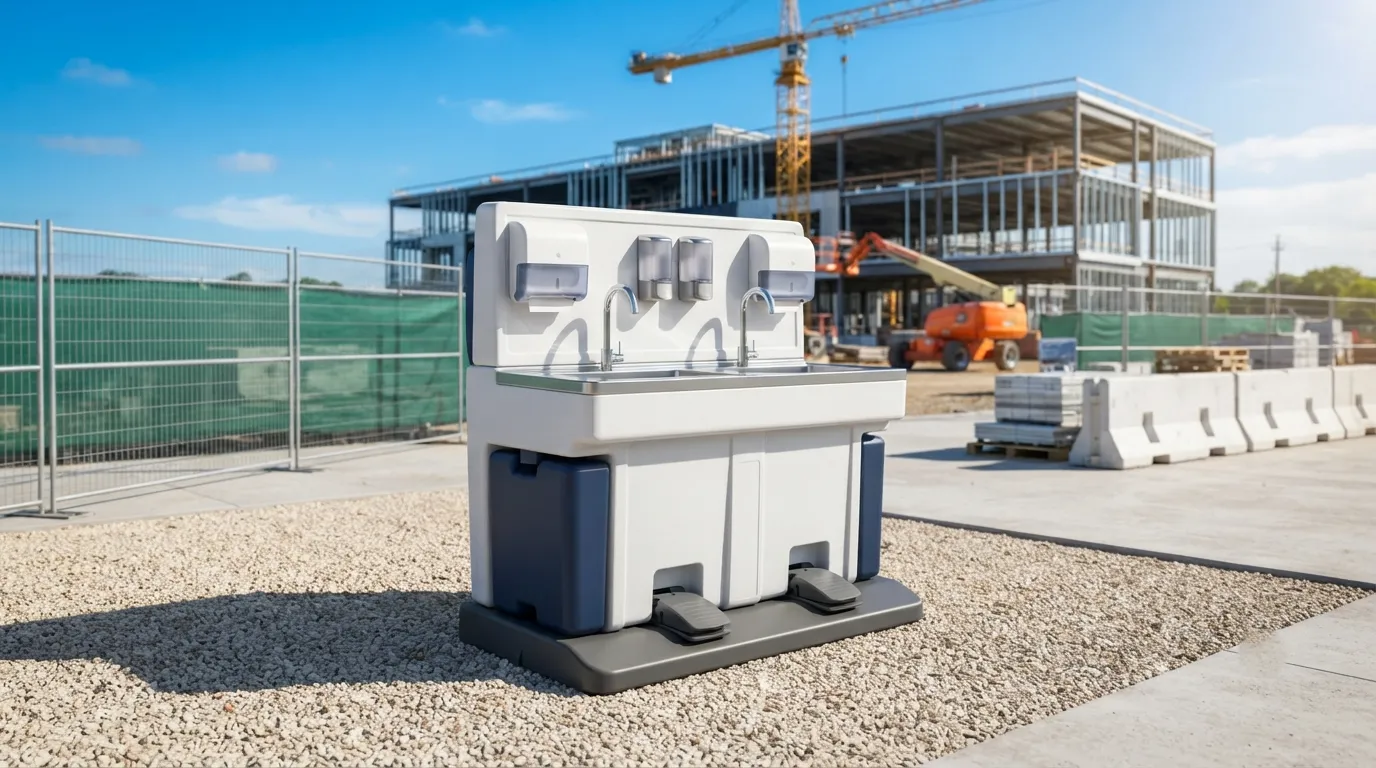
Yes. More people using a system on a given day means more load on the tank that week, even if the long-term interval doesn't change. A construction crew working a lot in Perris for several months puts steady extra flow through a residential system if they're using the house bathroom instead of dedicated facilities. construction site services covers portable options that keep crews off a homeowner's septic system entirely, which protects the pumping interval you already have. The same logic applies to event rentals: a wedding or backyard gathering that temporarily doubles bathroom traffic is a good reason to bring in event restroom rental rather than gamble on tank capacity that day. For sites needing water access alongside toilets, handwashing station rental rounds out temporary sanitation without touching the home system, and OSHA 1926.51(a)(1) requires an adequate supply of potable water at any workplace using that setup.
Perris properties on septic tend to sit on larger lots than the incorporated core, and driving distance matters for service scheduling. Good Hope is about 4.9 miles southwest, Romoland sits 5.7 miles southeast, and Mead Valley is 7.9 miles northwest, all inside a normal same-day service radius. Homeowners further out near Lake Elsinore, 11.5 miles southwest, or San Jacinto, 19.0 miles east, should factor drive time into emergency call timing. porta potty rental Perris and the broader service areas page cover which towns fall inside standard routing.
How do I know what size septic tank I have?
Check the property's original permit records or a prior pump-out receipt, both of which usually list tank capacity. If neither exists, a technician can measure it during the first service call. Knowing the size helps set a realistic pumping interval instead of guessing.
Can I extend the time between pumpings?
Somewhat. Cutting garbage disposal use, spacing out laundry loads and avoiding flushable wipes all reduce solids buildup. None of that replaces regular pumping, but it can push a household toward the 5-year end of the range instead of the 3-year end.
What happens if I skip pumping entirely?
Solids eventually clog the drain field, and that repair costs far more than pumping ever does. Backups into the house are the more immediate risk, usually showing up as slow drains first. septic tank warning signs lists what to watch for before it gets to that point.
Is a full house harder on a septic system than a small one?
Yes, more people means more daily flow and faster solids accumulation. Large gatherings or extra occupants for extended periods are common reasons homeowners move up their pumping schedule. Renting outside restrooms during high-traffic periods, like wedding restroom rental, keeps that added load off the tank.
Do commercial kitchens follow the same 3 to 5 year rule?
No, grease interceptors run on a completely different clock tied to usage. They're pumped once fats, oils, grease and solids hit 25 percent of the liquid depth, which for a busy kitchen can mean monthly service. grease trap pumping covers scheduling for food-service properties.

Next step
Get a delivery date
Tell us the address, the dates and the headcount. We size the order and confirm the route.