
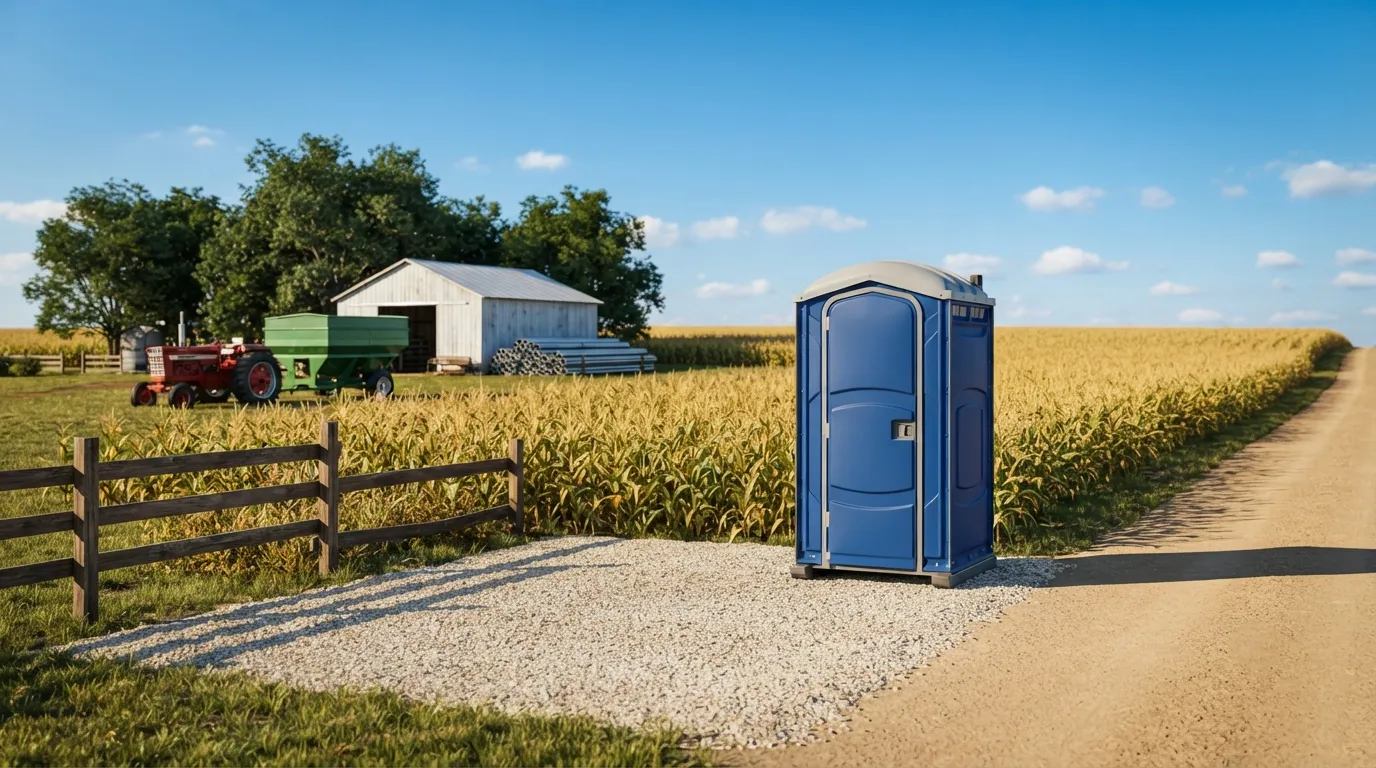
What Do Farms and Ag Sites Need for Restroom Compliance?
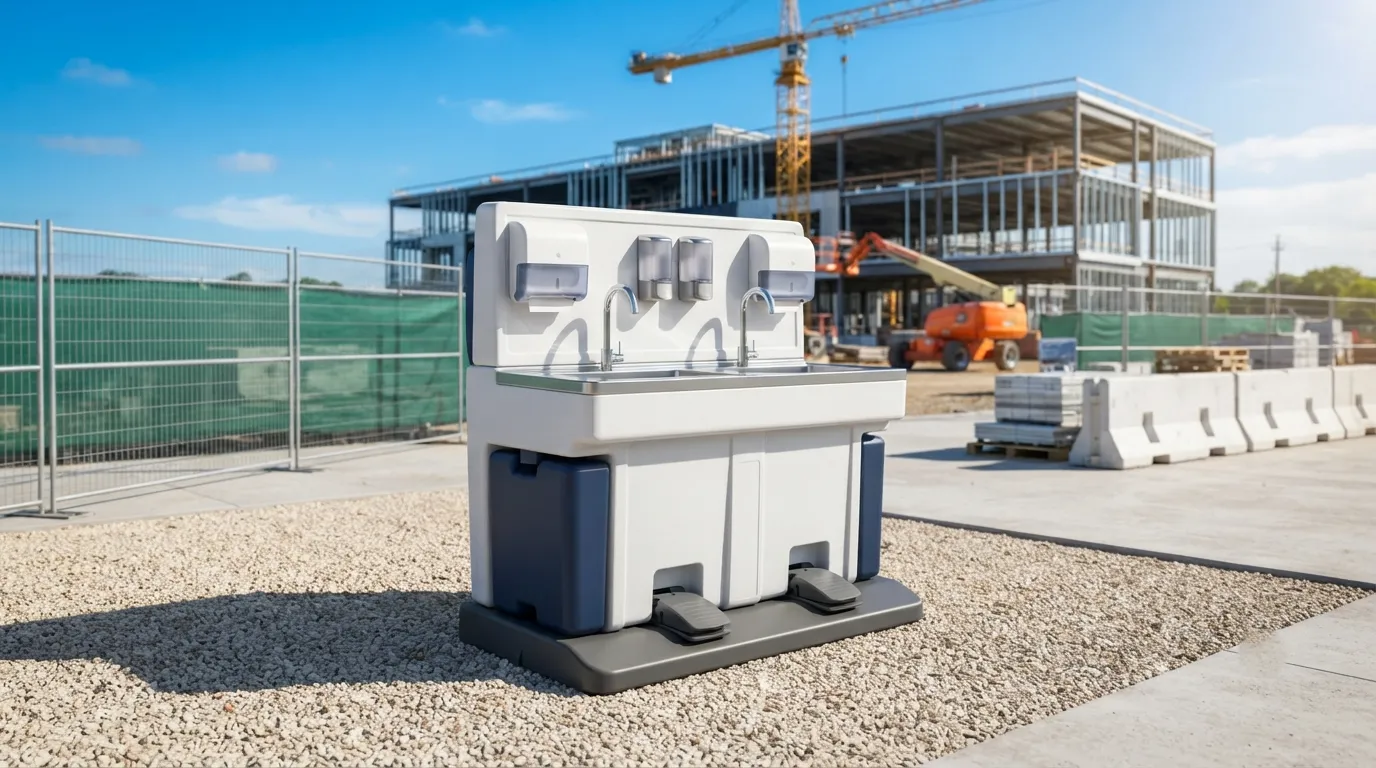
Field sanitation rules are different from a construction site services setup. OSHA 1928.110 covers hand-labor agricultural employees and requires potable water, toilet facilities and handwashing within a quarter mile walk of where people are working, not just parked at the property entrance. That means a single unit by the barn does not satisfy a crew working a back forty. Standard porta potty rental units cover most row-crop and orchard work, with a 60 to 70 gallon holding tank on a standard unit that handles a crew through a full week between services under the ANSI/PSAI Z4.3 baseline interval. If your operation runs packing sheds or wash stations too, and you need something beyond a basic unit, a deluxe flushable porta potty is worth a look, and a handwashing station rental keeps soap and water on site, since 29 CFR 1910.141(d)(2) requires soap and towels or a hand-drying device and hand sanitizer alone does not meet that. Perris ag sites often need water potable enough to drink under OSHA 1926.51(a)(1) as well, which our delivery crew accounts for when we place units near existing well or municipal lines. For big harvest crews spread across multiple fields, we help figure out counts through our how many porta potties do I need guide before delivery day, not after, and our OSHA portable toilet requirements page covers the construction-side rules if your operation also runs a building project.
How Many Units Does a Perris Farm Actually Need?
Crew size drives the number, not acreage. Under OSHA 1928.110, the ratio is one facility per 20 hand-labor employees, and that unit needs to sit within a quarter mile of wherever those employees are actually working that day, which on a spread-out Perris property might mean two or three placements instead of one. A 15-person crew still needs a unit close by even if the property line runs a mile. Ranches running livestock alongside crop work sometimes add a portable sink rental near loading chutes for a quick rinse between handling animals and handling produce, and a hand sanitizer station rental placed nearby covers quick contact points between wash-ups. We also place holding tank rental units where a fixed restroom exists but the septic system cannot take extra flow during peak season. Below is what most Perris ag operations pay for the core rental, based on our measured pricing across the valley; see our porta potty rental cost and porta potty rental per day pages for the full breakdown.
| unit | day | week | month |
|---|---|---|---|
| standard | $100 - $350 | $130 - $500 | $125 - $325 |
| ada | $200 - $400 | $240 - $400 | -- |
An ADA accessible porta potty belongs on any site with disabled workers or visitors, and ADA Standards 213.2 requires at least one accessible unit whenever single-user units are clustered, even at a small farm stand. If your crew rotates between fields near Good Hope, about 4.9 miles southwest of Perris, or Mead Valley, 7.9 miles northwest, we build the drop schedule around whichever field is active that week, and our service areas page lists every town we cover.
Can Existing Septic Handle Extra Ag Traffic?
Usually not without a pump-out first, and that is the most common call we get before harvest. A typical residential septic tank gets pumped every 3 to 5 years depending on tank size and household use, but a farmhouse system feeding packing crews or seasonal labor housing works much harder than that baseline assumes. Our septic pumping service clears tanks before the system backs up mid-season, and how often to pump a septic tank walks through the warning signs worth watching for on an older Perris property. Packing sheds and produce washing operations that generate grease-heavy wastewater need a different check: a grease interceptor gets pumped once fats, oils, grease and solids reach 25 percent of the liquid depth, and our grease trap pumping crew tests that level rather than guessing on a calendar. If a tank backs up during harvest, emergency septic service gets a truck out fast, and septic tank warning signs covers what to watch for between now and next season so it does not happen at the worst possible time, while septic tank pumping cost and septic tank cleaning cover the rest of what a pump-out visit involves.
How fast can you deliver to a rural Perris property?
Rural drop-offs usually run on the same schedule as our in-town Perris deliveries, though gate codes and long driveways add setup time. Call ahead with access details. We also service Romoland, 5.7 miles southeast, and Lake Elsinore, 11.5 miles southwest, on regular routes.
Do you service livestock operations differently than crop farms?
Somewhat. Livestock sites often need a portable sink near handling areas for biosecurity, in addition to standard units for crew. Crop operations lean harder on handwash stations near packing points. We size both based on daily headcount, not acreage.
What happens if a unit tips over in a field?
Call us and we will send a tech to right it, clean the area and check the tank seal. Setting units on stable, level ground away from slopes and loose soil, consistent with ADA Standards 302.1 on firm surfaces, cuts this risk considerably from the start.
Can one unit serve two adjacent fields?
Only if both fields sit within the quarter mile walk that OSHA 1928.110 requires. If crews split further apart than that, plan on a second unit rather than stretching one placement across the whole property.
Do you offer monthly contracts for ongoing farm use?
Yes. Most ag clients run monthly porta potty rental agreements that renew through a growing season, with weekly service included. Request a quote through our request a quote page and we will scope unit count against your crew size.
Next step
Get a delivery date
Tell us the address, the dates and the headcount. We size the order and confirm the route.